Because human data is limited — the long-term safety profile is not fully established. Reported side effects of KLOW are generally mild and most commonly involve local irritation at the injection site. Our own practice experience with KLOW specifically is limited compared with Wolverine, which uses the same repair pair without KPV. This picture is drawn from preclinical research and has not been established for this blend in human clinical trials. These are the reported and studied applications of the component peptides; they are not established, FDA-approved indications.
Researchers who have already reviewed the KLOW component biology overview will find that the mechanistic distinctions above map cleanly onto the receptor and signaling literature for each formulation’s individual constituents. Researchers interested in oxytocin’s standalone preclinical profile can access the Oxytocin 5MG research material for comparison studies. Oxytocin is a nine-amino-acid neuropeptide with one of the most extensively characterized receptor profiles in the peptide research literature. The tripeptide’s small molecular size, compared to the full α-MSH sequence — makes it a useful tool for dissecting which portions of the parent peptide are responsible for observed receptor interactions in vitro. KLOW is a multi-peptide research formulation that combines several bioactive sequences into a unified laboratory material. Researchers interested in a detailed component-by-component comparison can also reference the GLOW vs KLOW comparison guide.
It is marketed around recovery, skin quality and inflammation, but studies of the individual ingredients do not establish those benefits for the combined product. Whether subcutaneous GHK-Cu reproduces those results has never been studied. Skin is the best-supported claim, driven by GHK-Cu’s 62.5% mass share. The last of those is the only window matching an established biological timescale, dermal collagen turnover. Community reports describe injection-site effects within days — subjective inflammatory changes at two to four weeks, and skin changes at four to eight weeks. Injection-site redness, stinging and soreness are the most commonly reported effects.
KLOW Benefits: What People Use It For

Studying the blend answers a different question than studying KPV (GHK-Cu), BPC-157 or the thymosin fragment individually. The largest animal literature belongs to BPC-157 — yet the published controlled clinical record for it remains thin relative to the volume of rodent work. Further reading on endpoint selection sits in the biomarkers explainer (the gene expression notes), the laboratory panel discussion and the post-research analysis guide. Background on the compounds is collected in the history overview (the beginners guide), and the multi-peptide synergy discussion. The Ac-LKKTETQ fragment represents the actin-binding motif of thymosin beta-4 (so its literature centers on G-actin sequestering), cytoskeletal turnover and cell migration rather than on a membrane receptor. It is sold for laboratory research use only and is not for human consumption.
Has the KLOW Blend Itself Been Studied?
Each component has different properties — different mechanisms, and potentially different dose-response curves. These questions keep researchers awake at night, and for good reason. We’re excited to see the new discoveries that will shed further light on its complex mechanisms. We are dedicated to providing reliable research materials for scientists worldwide. Many common research peptides have more direct effects, such as stimulating growth hormone release or promoting tissue regeneration. Based on its observed mechanisms (KLOW is primarily being researched in areas related to cellular resilience), adaptive responses to stress, and the modulation of energy metabolism.
The combination of four complementary peptides with distinct mechanisms provides comprehensive biological support. Your results—and safety—depend entirely on source quality. At standard research doses, an 80mg vial covers roughly 3 to 4 weeks. The group’s 1993 rat experiment also found greater accumulation of collagen and other supporting material in implanted wound chambers.16, 17 Sosne and Ousler’s 2015 trial compared thymosin beta-4 eye drops with placebo in 72 people.
TB-500 has no documented drug interactions in the published literature, though its anti-inflammatory and immune-modulating effects may interact with immunosuppressive medications.

When you are injecting a compound, the sourcing decision matters as much as the dosing decision. Always consult a qualified healthcare professional before starting any peptide protocol. The ranges above are general information drawn from published research and real-world protocol data, not a dosing recommendation for you specifically. A frontload of higher weekly doses for the first month followed by reduced maintenance dosing is a pattern that appears consistently in real-world TB-500 protocol documentation. Some researchers run shorter 4-6 week cycles for acute applications and longer continuous protocols for chronic conditions.
The numbers below reflect ranges documented across published studies and real-world protocol documentation for each individual component. Most peptides are broken down by stomach acid and digestive enzymes before they can be absorbed, which is why injectable routes are standard for peptide compounds. IM administration (injecting directly into muscle tissue) is used in some protocols and offers a slightly faster onset than SubQ due to the higher vascularity of muscle tissue.
Be wary of vials priced well under market, as testing is the most common cost a cheap seller cuts. They are not FDA-approved for human use, so buying KLOW means operating outside the standard pharmaceutical system. Pricing for an 80mg KLOW vial in 2026 generally runs $99 to $200, depending on the vendor’s quality tier, current promotions, and whether you buy single vials or in bulk.
Tendon healing in rats
Anything missing a lot number is a marketing document wearing a lab coat. The vial worth asking questions about is the uniformly chalk-white one, because an absent tint can hint that the GHK-Cu fraction is lower than the label implies. Once a vial is reconstituted, refrigerated storage between 2°C and 8°C is standard laboratory practice and the solution is treated as short-lived rather than indefinitely stable.
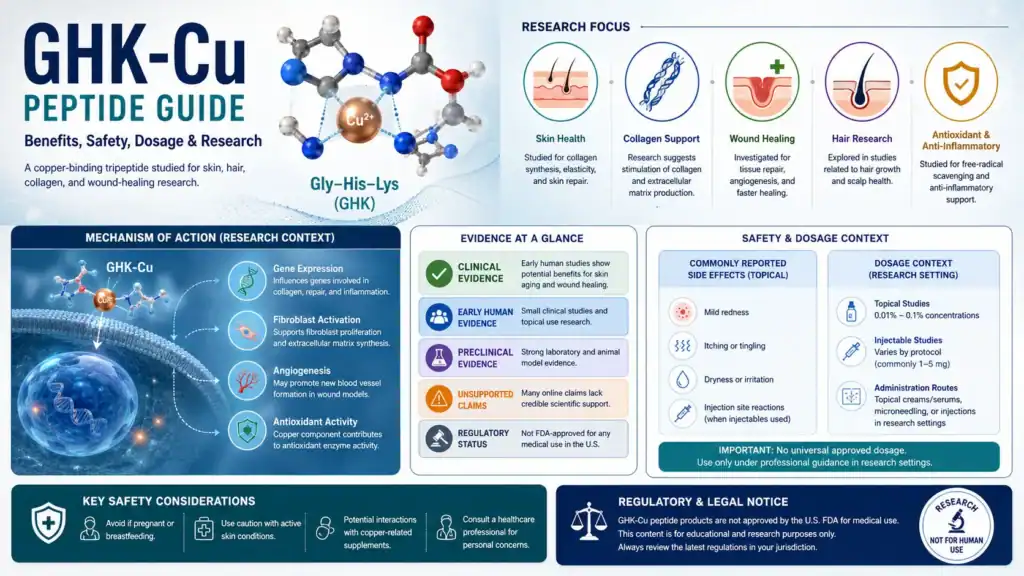
Eleven of 12 people who received BPC-157 alone and three of four who also received thymosin beta-4 reported relief.1 Mulder’s 1994 randomized, evaluator-blinded trial compared topical GHK-Cu gel with its inactive vehicle. KLOW combines GHK-Cu, BPC-157, TB-500 and KPV.31 The KLOW ingredient guide explains their listed amounts. The findings explain the interest in KLOW’s ingredients; how all four behave together remains a separate research question. GHK-Cu carries the most solid evidence in the mix (mainly for skin), while BPC-157, TB-500, and KPV are all still largely supported by animal and lab research rather than confirmed human trials.

Skin improvements from GHK-Cu often become visible within 2 to 3 weeks, manifesting as improved texture, reduced fine lines, and enhanced hydration. Morning administration is common because some users report mild energizing effects that could interfere with sleep if taken too late. Pay attention to injection site reactions, energy levels, sleep quality, and any digestive changes. Running out mid-cycle interrupts the physiological processes you are trying to support. These calculations matter for planning your supply and budgeting your protocol. This provides steady anti-aging support without overwhelming your system.
Dermal collagen remodelling genuinely operates on a scale of weeks to months — consistent with the human topical GHK-Cu data. Read it as a picture of what users say, not as results you should expect. Bundle pricing is commonly quoted at well under the cost of buying all four components individually, with vendor figures for the blend often landing around half the separate total.
Once reconstituted — plan to use within 4 to 6 weeks refrigerated. In 2026, anticipate a price range of $130 to $200 for each 80mg vial from a reputable supplier. For volumes that are not standard, employ the peptide calculator.